Coaches room Sullivan Fox

The Coaches Room is a regular feature throughout the 2025-26 season by former NHL coaches and assistants who turn their critical gaze to the game and explain it through the lens of a teacher.

In this edition, Dan Bylsma, former coach of the Pittsburgh Penguins, Buffalo Sabres and Seattle Kraken, assistant with the New York Islanders and Detroit Red Wings and coach of the 2014 U.S. Olympic team, discusses the difficult decisions to be made in picking the rosters for the Olympic Winter Games Milano Cortina 2026, which are due Dec. 31.

Selecting the 25 players who will be on the Olympic team is a collaborative effort from a lot of different people, including management and coaches. From ranking the players to putting the roster together, there's a lot more to the conversation than just who's the hot player at the time.

With the forwards, they're looking at the line combinations, who plays well together on their NHL teams or played well together in past tournaments and who might play together in the Olympics.

For example, Chris Kunitz made Canada's Olympic team in 2014, and rightfully so. He was the best player due to the continuity of playing with Sidney Crosby on the Pittsburgh Penguins. The 2010 Canadian roster similarly had the San Jose Sharks line with Joe Thornton and Patrick Marleau, and the 2010 and 2014 rosters had the Anaheim Ducks line, so to speak, with Ryan Getzlaf and Corey Perry.

For the U.S. roster for upcoming Olympics, they'll probably look at some of the line combinations they used at the 4 Nations Face-Off last season. It was only a short tournament, but by the final game, Matthew Tkachuk and Brady Tkachuk were playing with Jack Eichel.

For the coaches and management from the countries that played in the 4 Nations Face-Off -- the U.S., Canada, Sweden and Finland -- that experience helps immensely with the choices they'll need to make. Mike Sullivan, who coached that U.S. team at 4 Nations and will coach the Olympic team, has a good feeling about who plays well together and who doesn't and what combinations might work best.

I jotted down the possible candidates for the U.S. Olympic roster, and you can easily get to 24 forwards, and 11-12 defensemen. There are going to be five forwards, I think, that aren't on the team who you could make a great case for making it.

In 2014, I don't think it was as deep as saying there were 24 or 25 forwards that could be on the U.S. team. It was probably that deep with defensemen, though.

Without revealing the depth chart, I went back and looked at the defensemen and there were certainly three or four that could've been on the team that for various reasons, didn't make the roster.

Looking at the current U.S. defensemen, it's probably a little bit harder because you have three left-shot 'D' with Quinn Hughes, Zach Werenski and Jaccob Slavin, who have been there before and done that. Jake Sanderson is also a left-shot 'D,' and then you throw Lane Hutson, another left-shot, into the equation.

If you sat in a bar room and tried to decide who the best players are, you'd say, "Oh, you've got to have Lane Hutson."


MTL@COL: Hutson blasts in one-time PPG to cut deficit

On the right side, you have Adam Fox, Charlie McAvoy and Brock Faber, with Seth Jones and John Carlson also in that mix.

There's a little more depth on the left side, so does one of the left shots play on the right side? If you choose to play Sanderson and move Slavin to the right side, with McAvoy among the six players named to the team in June and likely slotted in the lineup, which of the other right-shot D will play?

It's a lot easier to talk about when you're not making decisions on lefty-righty or who is going to be on the penalty kill. It's easy to find power-play guys in that group. It's a little tougher to find penalty-kill guys.

Most of those defensemen have killed penalties, but you're looking to step over the boards with shutdown guys and be confident in the mix of that group. All that goes into the thought process, especially for the coaches.

In international tournaments, special teams plays somewhere in the 60-65 percent range of success for your team, so power play and penalty kill will be extremely important.

I think another benefit of the 4 Nations tournament for all the teams is, they've had that experience with basically the same players. So, they know which players are cohesive together, what units could potentially work. And if you put those units together again, that leaves out players who weren't there.

Two aspects of putting together your team that can't be overlooked are the roles and the versatility of the players. When you're as deep as 23 forwards and 12 defensemen, you're talking about great players, star players being asked to play in different roles.

There's an emotional part of playing a role for a player, like being asked to play the wing. When you look at the center depth chart for the U.S and see Eichel and Auston Matthews, then who is your third-line center and who's your fourth-line center?

Dylan Larkin, obviously, was awesome in the 4 Nations, so it looks like he'd be penciled in at one of center spots. And do you look for a checking or role-playing centerman like Vincent Trocheck?

DET@CBJ: Larkin gets a touch Seider's shot for PPG

When you're putting together your roster, you're asking all these questions, not just strictly saying, "Who are my best four or five centermen?" Then, with picking roles, "Is it possible for one of my centermen to play the wing? Is he best suited to play the wing?"

Jack Hughes is a great player. You want him on the roster, but is he best suited to play fourth-line center? Can he play the wing? His experience playing wing at the 4 Nations is an added bonus for the coaching staff.

In 2014, the penalty kill was a part of those questions. If you look at the U.S. roster right now, a number of those forwards have played on the PK. They might be playing on the PK in a secondary role on their NHL team, and is the coach comfortable with having those players be penalty killers against Connor McDavid and Crosby and the best players in the world on their power play?

We looked at combinations for the 2014 team, such as David Backes and T.J. Oshie, who killed penalties together with the St. Louis Blues at that time.

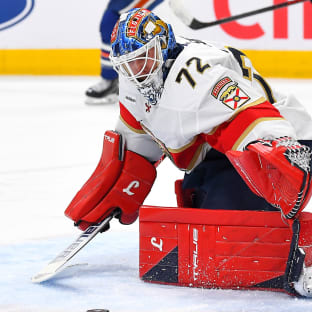
There were also difficult choices with the goalies, especially with our top two goalies, who were Jonathan Quick and Ryan Miller. It wasn't a tough decision to take those two guys. It was a tough decision who was going to start.

I think the U.S. has a similar situation now. Connor Hellebuyck's body of work over the past few years would say he's the best goalie. Jake Oettinger is right there in that mix, though.

Like the 4 Nations, it ultimately will come down to one game, and goaltending is the one position where I think being hot and playing well leading into the tournament is extremely important for the coach in deciding who starts.

With all the positions, experience in big games is a significant consideration.

The Olympics is longer than the 4 Nations Face-off, but it's still an extremely short tournament and you're basically playing for a one-game moment. In 2014, ours was in the semifinal against Canada to get to the gold medal game. We played the whole tournament to get to that one game, and players will stake their reputation or make their reputation on being big-game players.

So, experience is a big part of it. That really comes down to not only the player and the player choice, but also the coach being comfortable putting those players on the ice in big moments in a big game. That's not as easy as saying, "These are the 25 best players."

When you get down to the final decisions, it's really about the coach and management being comfortable with the players in those spots.

Related Content