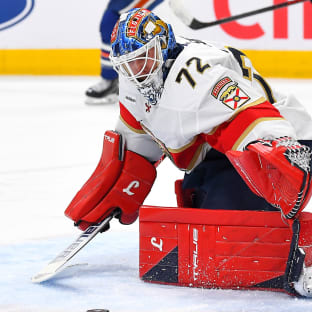
Skinner PIT Vladar PHI goalie breakdown first round

Goaltending is an integral part of the Stanley Cup Playoffs. To better understand the strengths and weaknesses of each goaltender, NHL.com charted 100 goals against each goaltender late in the regular season to see what patterns emerge. Here is the comparison between Stuart Skinner off the Pittsburgh Penguins and Dan Vladar of the Philadelphia Flyers.  

The Eastern Conference First Round between Philadelphia Flyers and Pittsburgh Penguins features one goalie making his playoff debut, one coming off consecutive trips to the Stanley Cup Final, and possibly a third whose best performances often come at crunch time. 

Though Dan Vladar is a first-time playoff No.1 for the Flyers, Pittsburgh’s likely Game 1 starter Stuart Skinner has already started 50 with the Edmonton Oilers, but for all positives that can come with experience, the reality is all that postseason experience also means the strengths and weaknesses of his game have been broken down in fine detail. 

The same holds true for the Penguins’ other option in net, Arturs Silovs, whose early career struggles with screens got picked apart by the end of two playoff rounds with the Vancouver Canucks in 2024. 

Whether the Flyers can target those well-known tendencies, and how quickly the Penguins identify Vladar’s could go a long way in deciding a winner in this best-of-7 series, which begins with Game 1 Saturday in Pittsburgh (8 p.m. ET; ESPN, SN, TVAS).

Stuart Skinner

Pittsburgh Penguins 

Skinner was traded to Pittsburgh for goalie Tristan Jarry on Dec. 12, 2025 and now appears to have the edge on Silovs as the Game 1 starter for the Penguins based on experience and late-season starts.

Skinner for 1st round goalie matchup

Shooters favor the glove side: Goal totals do not equate to save percentage but it’s hard to ignore the discrepancy between the glove and blocker sides here, especially when the 27 high-glove goals include five clean shots on breakaways and partial breakaways, some of which is a tendency to retreat fully inside his crease before the shooter hits the hash marks. Add in five of the eight clean-shot goals going over the glove, and it seems to be a target already.  

Rebounds off to the side: The 16 tracked rebound goals were well above the 11.7 average for more than 10,000 goals tracked for this project since 2017, and 13 were spilled off the side, contributing to the high goal total outside of Skinner’s left skate in particular. Skinner manages screens well, with 15 goals slightly below the 15.1-percent tracked average, but low shots into traffic can create more of these rebound chances, challenging lateral mobility from a narrow butterfly with inherent side-to-side recovery delays. Just don’t get too tight to the net because he wears new CCM Tacks pads designed to create more active rebounds.

East-west adjustments: Skinner altered his initial depth on rush chances this season and is no longer as likely to get stranded too far outside his crease by passes high in the zone because he’s starting from a more neutral position. His results on lateral plays across the middle of the ice have improved as a result, with 20 such goals among the 100 tracked this season, which below the 22.1-percent average, and only two on those high side-to-side passes above the hash marks since the trade to Pittsburgh.

DET@PIT: Skinner makes glove save on Raymond in 3rd period

Lateral down low: Despite those improvements, there is still a tendency to get off balance and end up sprawled out or diving on quick change-of-direction plays lower in the zone, including 10 from the area across the middle of the slot below the hash marks. Five of these came either directly from, or right after, passes from below the goal line. This suggests it is a good idea to force Skinner to work in and off his post with plays from behind the net and below the bottom of the circles. Also, shooting wide on purpose from the points could work. There was also still a tendency to slide on the first pass, sometimes higher in the zone than most peers, which can leave Skinner more vulnerable to those against-the-grain shots and quick passes.  

Stretch him out on breakaways: That same narrow butterfly can leave Skinner reaching on lateral plays, whether on walkouts in tight or on breakaway dekes, with a tendency to pitch his torso forward to create additional extension with the pads. In addition to the five high-glove shots, dekes wide to the left were the next most prominent goal-scoring method among the 15 breakaway and partial-breakaway goals tracked in this sample.

Dan Vladar 

Philadelphia Flyers

Vladar was excellent in his first full season as a starting goalie, setting career highs in starts (51) and wins (29), and matching his best save percentage (.906) after being signed by the Flyers as a free agent during the offseason. This is his first time as a playoff starter, but a balanced, neutral tactical approach should provide a good foundation for what’s to come.

Vladar for first round goalie matchup

Color around the edges: Vladar forces you to beat him with good shots by playing a contained game, deeper in his crease. This allows him to be in position for most side-to-side plays and leaves him scrambling less than many peers. He doesn’t take himself out of plays early and it’s reflected in how few times teams are able to tap pucks into empty nets outside either pad. Of those 17 goals, 11 came off rebounds and just five were off low lateral passes across the middle of the ice. It also shows in fewer goals -- 14 total -- off broken plays. Like most things in goaltending, however, there is a give and take to playing deep, and it shows up in exposure on screens (21 goals) and other plays that force him into more of a blocking mode and leave additional space for the higher-than-average goal totals over each hand.

Make him work off posts: Low-high plays and passes originating from below the goal line -- or from sharp angles below the bottom of the face-off circles -- factored into an alarming 40 percent of the tracked goals, more than double the 17.1-percent average. There was a mixture of factors, and a variety of play types, including passes higher in the zone. Some were simply great plays across the ice, other times defenders screened Vladar after passes into the middle. Shooting trends included one-timers and against-the-grain shots that caught him moving. There was also a tendency for Vladar to be active with his stick trying to cut off passes on in-tight plays, something puck carriers need to be aware of. It can delay his ability to get out and across and cover the far side of the net.

PHI@DET: Vladar denies Kane with a glove save in 2nd

Against the grain: Some of it was the above-mentioned low-high plays, but shots and plays against the flow of play accounted for 26 percent of the goals tracked in this sample, well above the 18.4-percent average. This included clean looks and quick shots higher in the zone, with Vladar’s more conservative initial positioning not only creating a little more open net, but also a tendency to be a little flat rather than fully squared to shooters. 

High blocker/low glove? Six of those clean-look goals from further out were scored high on the blocker side, and six more were scored low on the glove side compared to just two over the glove and three under the blocker. But four or the 12 rebound goals Vladar surrendered in this sample were on pucks that popped out of his glove on high-shot save attempts.

Related Content