dobes_lyon_050426

Goaltending is an integral part of the Stanley Cup Playoffs. To better understand the strengths and weaknesses of each goalie, NHL.com charted 100 goals against each one late in the regular season and through the first round of the postseason to see the patterns that emerge. Here is the comparison between Alex Lyon of the Buffalo Sabres and Jakub Dobes of the Montreal Canadiens, who face off in the Eastern Conference Second Round.

The Eastern Conference Second Round between the Buffalo Sabres and Montreal Canadiens features two goalies with very different paths to a starter in the Stanley Cup Playoffs. 

Alex Lyon only has one prior stint as a postseason No. 1 in nine NHL seasons before coming off the bench to replace Ukko-Pekka Luukkonen during Game 2 of the first round and winning three of the next four starts, while giving up just five goals, to help the Sabres eliminate the Boston Bruins in six games. 

Jakub Dobes was tabbed the Canadiens' playoff starter after a strong finish to his rookie season and bested two-time Stanley Cup winner Andrei Vasilevskiy and the Tampa Bay Lightning in a tightly contested seven-game series. 

Their size is as different as their backgrounds, but there are some similarities in approach and style between Lyon (6-foot-1) and Dobes (6-4). How well each team identifies and targets those tendencies could help determine the winner of this series.

Alex Lyon

Buffalo Sabres

The regular-season sample size was limited to 92 goals in part because of the job share with Luukkonen that saw Lyon start the playoffs as the backup. Just like after Lyon came off the bench for a 4-3 overtime win at the Edmonton Oilers on Dec. 9 to spark the Sabres' second-half surge up the standings, he has been exceptional since taking over in the postseason with a .955 save percentage. A cerebral goalie not afraid to bait shooters, that midseason relief effort in Edmonton was the first of 10 straight wins, so Lyon has shown he's capable of keeping up this high level.

Alex Lyon graphic for Round 2 goalie comp

Surprising balance: Lyon is an aggressive goalie by today's increasingly conservative positional standards, often starting well outside his crease and timing his retreat off the rush, and even getting outside the blue ice on some in-zone plays. It's a testament to his speed, compete and ability to anticipate and read the play that he only gave up 14 goals (15.2 percent) along the ice outside the skates in the regular season, well below the tracked average of 24.4 percent. It's also a reminder to shooters of the importance of elevating even when they think there might be an open net because Lyon uses that extra flow in his game to build momentum and power into lateral pushes that can take that space away in a hurry. 

Beat him to the post off lateral passes: Lyon's 21 goals (22.8 percent) off east-west plays across the middle of the ice almost matched the average (22.1 percent) exactly, but eight were scored on passes above the hash marks and that above-mentioned aggression, which can leave him halfway to the face-off circle when an odd-man rush enters the zone, is something that can be targeted with high, hard passes and one-timers that don't give him time to cover the extra distance required to get to his next save position. It was evident on Bruins forward David Pastrnak's goal in Game 6 and several goals in the regular season, including on some plays lower in the zone. Though some goalies who move more are best targeted with against-the-grain shots, the key against Lyon appears to be quick, short-side shots that beat him across. Pastrnak was able to score along the ice in Game 6, but usually getting those shots 12 inches off the ice is key because Lyon often gets a pad there. Sometimes it's into the post, which slightly delays or limits his upper-body seal. 

Breakaways deke or 5-hole: One of the few goal attributes notably above the tracked average was breakaways, with 16 in the regular season (17.4 percent) above the 10.2-percent norm. Pastrnak's against-the-grain deke in the first round is an example. Of course, those totals don't represent a save percentage and may simply be the result of the Sabres giving up too many one-on-one chances, but it may be worth noting five were scored 5-hole, including three on shots, while 10 of the other 13 came off dekes that stretched him out but often still required elevation on the finish to get over an outstretched pad.


BUF@BOS, Gm 6: Lyon shuts the door on Lindholm in the 1st

Back the other way: The goals came on a variety of play types, including the above-mentioned breakaways, but outside of finishing east-west passes on the short side, shooting or making plays the other way was an effective tactic, contributing to 23 goals (25 percent), well above the 18.4-percent tracked average.

Tips, traffic and targeting patience: Lyon's regular-season performance included being right around the tracked averages on screens (14 goals), rebounds (11), broken-play bounces and scrambles (13), but Boston scored two of five on screens in the first round. As well as he manages traffic with a mixture of high looks over screens and flexed stance sightlines around them, his patience holding his edges on these plays can be targeted with low five-hole shots he can't see, which, at worst, results in a rebound.

Work below the goal line: Attacks from dead angles and behind the goal line were a factor on 22 percent of the goals, above the 17.1-percent average. Though it may simply be a matter of making it harder for Lyon to get out near the edge of his crease, there was also a tendency by him to get caught playing outside his posts laterally, especially on the glove side, including a couple goals jammed in between his pad and that short-side post.

Jakub Dobes

Montreal Canadiens

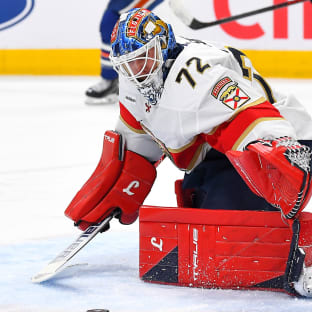
A rookie goalie helping the Canadiens into the playoffs has worked before. After some ups and downs early in the season, the 24-year-old went 11-5-0 with a .916 save percentage that ranked third in the NHL (minimum 15 games) after the 2026 Winter Olympics before an impressive series win against the Lightning (.923 save percentage). He continues to pick his spots wisely -- and more judiciously -- than earlier in the season when it comes to charging out of the crease with his big, mobile frame.

Jakub Dobes graphic for Round 2 goalie comp

Low glove? It's worth remembering these goal totals do not represent a save percentage, but it was hard to ignore the biggest regular-season number being just over the pad and under the glove of Dobes, especially since it's more than double the 10.4-percent tracked average. Dobes does use a modern "fingers-up" glove position with the hand turned up almost like you're motioning for someone to stop, and it does take time to turn that glove down over the pad in what doesn't always look like the most natural motion. That was evident when Lightning Dominic James kept the puck on a 2-on-1 and snapped a short-side wrist shot under the glove to tie Game 5 in the second period. It is also something shooters are taught to look for and target with lower shots. The reality is only five of those 24 goals came on clean looks, one of those was a breakaway and all were earlier in the season when he was pushing his glove out at low shots more than tracking into them. It's also worth noting only one of four clean-look goals in the first round went in under the glove and Tampa targeted high-glove more often on those chances.

Beware the long limbs: Trying to convert second chances, or even cross-ice passes below the hash marks, along the ice give Dobes a chance to use his athleticism and long limbs to make a momentum-changing save. There were several against the Lightning on plays in tight. The need to get these pucks above the pad played a role in some of the goals under his glove, including nine off broken plays and bounces in the regular season. 

Wait for the step out: Dobes had a habit of sliding and shifting outside his posts earlier in the season to the point he often wasn't covering anything with his big frame but has quieted his game and that tendency. He typically plays with a conservative initial depth within his crease but will take a step out once he reads shot, something he did aggressively on Tampa Bay defenseman Erik Cernak alone in the middle of the ice five minutes into Game 1. It's a risk-reward read and waiting for that push out before making an east-west pass increases both the distance he must travel and the odds of scoring. As for sliding out of position, it happens most often now on odd-man rush passes, and the Canadiens' inability to prevent a second pass back the other way led to five goals in the regular season, tied for the sixth most in the NHL despite playing fewer games than four of the other goalies on the list.

MTL@TBL, Gm 5: Lightning deliver final push in final Game 5 minute

Lateral aggression: Where Dobes has really quieted his aggression is in playing beyond his posts laterally, something that used to plague him more regularly and left him out of the net. Tampa created a couple such chances, including one off a Brayden Point rush off right wing that forced Dobes to dive back headfirst with the paddle of his stick to save a goal. The Lightning also caught him shifting slightly outside his post on a shot off the end boards that Nikita Kucherov collected behind the net and converted with a wraparound on the other side. They scored each of their three of their east-west goals on low passes from Dobes' left to right, twice catching him moving into his post as the pass went through to the other side, and another that led to a rebound from a similar play that sealed Game 6 in overtime. Plays from behind the net and below the face-off circles were a factor on 20 percent of regular season goals, close to the 18.4-percent average, but five of 15 were allowed in the first round.

Traffic proof? Dobes has excelled against screens this season, combining his size with a tall, narrow stance to see over traffic rather than having to look back and forth around it from a lower stance. Tampa Bay did score three screened goals, and like most things in goaltending there is a give and take. Dobes can get caught in transition from that high stance into his lower save stance, making quick shots and one-timers, which were a factor on 32 goals, an effective tactic, even from the perimeter.

Against the grain: Shots against the flow of play accounted for 20 percent of the goals on Dobes, including a lot of the clean looks, and that same tendency to reach and push at low shots in a way that pulls his torso away from the puck played on role low-blocker too. There were five against-the-grain goals in the first round, but they included the low passes that caught him moving into his post as passes went by the other way.

Related Content