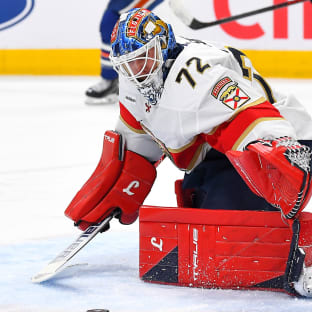
Rarely out of position: Stolarz moves well, especially for his size, and plays with a conservative depth in-zone, so it’s not a shock that he excels on the tough side-to-side chances most teams are trying to create more of, with just 12 goals (16.9 percent) on plays across the middle of the ice below the top of the face-off circles, well below the 22.1 percent tracked average. The Ottawa Senators only converted one such lateral play in six games in the first round. It also shows up in fewer goals along the ice outside of his pads, which is how backdoor tap-ins are recorded. Stolarz can cover the shorter lateral distances his depth creates even from a low, wide stance, so don’t expect to score if you don’t get the puck over his pads. However, there is a tendency to slide across on plays other goalies might try to beat on their skates, which is a natural tendency from that wider stance, so there is exposure in the top corners as well as a vulnerability to shots back the other way, which accounted for half those east-west goals.
Scrambles: Similarly, Stolarz uses his size, positioning and patience to excel behind the chaos many teams try to create around the net in the playoffs. He doesn’t chase pucks outside his posts as often as his peers, preferring instead to sit back knowing the puck has to come back through him, so it’s no surprise his numbers on these types of plays are better than average, even if that depth can create additional vulnerability on deflections off the bodies in front.
Low-high and wait: There is a tendency to push out at shooters from that conservative initial depth, especially after low-high passes, and waiting for that forward movement before making another play or pass makes it a lot harder for any goalie to recover laterally, even one who is able to push from the extremes of a low, wide stance as well as Stolarz.
Pad rebounds back in front: One of the few downsides of being blessed with a butterfly as wide as Stolarz is that low shots off the pads are more likely to end up back in front of the net rather than being angled into the corners, which played a role in several of the nine regular-season rebound goals and one of two in the first round against Ottawa.
Screens: Stolarz allowed 15 goals (21.1 percent) through traffic, slightly above the tracked average of 15 percent, and the Senators used screens to create four of their 14 goals in the first round, including the overtime winner in Game 4 and the opening goal in Game 5. Getting to the middle of the ice as a shooter makes it harder for Stolarz to easily look over screens in his tall stance and forces him to pick a side from a lower save stance, creating additional vulnerability to deflections and second chances if you get him pushing into an initial shot to the other side.
Paddle down and dead angles: David Perron’s Game 6 tying goal from below the goal line is the exception rather than the rule, as Stolarz admittedly got a little overzealous with his use of paddle down in that situation. Nonetheless, it will have the Panthers looking for similar mistakes with his use of the stick, and a couple more regular-season goals over the right shoulder from sharp angles while he was down in a similar RVH post-integration technique make it worth noting.
Sergei Bobrovsky
Florida Panthers
Bobrovsky is in his 15th NHL season, has won the Vezina Trophy as the NHL’s top goalie twice and the Stanley Cup last season, so there aren’t a lot of secrets from former teammates, like Stolarz, defenseman Oliver Ekman-Larsson and forward Steven Lorentz, required to break down his game. When it comes to his performances the past three postseasons, it may not matter how much you think you know about his style anyways because at his best, Bobrovsky can sometimes feel impossible to beat. That does make it that much more important not to feed into his strengths when the stingy Panthers do give up chances.