3. Depth disappeared
The Penguins received offensive contributions throughout their lineup during the regular season with 12 players scoring at least 13 goals, including four with at least 20. Only eight scored goals against the Flyers, though, led by Malkin, Kris Letang and Connor Dewar with two each. After leading Pittsburgh with 33 goals during the regular season, Anthony Mantha didn't score any in the playoffs. Egor Chinakhov, who had 18 goals in 43 games after being acquired in a trade with the Columbus Blue Jackets on Dec. 29, also didn't have a goal in the series. In contrast, the Flyers had 14 different players score goals, including five defensemen.
4. Power-play struggles
After the Penguins power play was a strength for much of the regular season, when it was ranked seventh in the NHL (24.1 percent), it couldn't make a difference against the Flyers, going 3-for-19 (15.8 percent). It went 0-for-7 in first two games, including giving up a backbreaking short-handed goal to Garnet Hathaway in the second period of a 3-0 loss in Game 2. When the power play got back on track in Game 3 and went 2-for-5, the penalty kill faltered and allowed two goals while short-handed three times against a Flyers power play that was ranked last (15.7 percent). Pittsburgh was unable to build on its Game 3 success with the man-advantage and went 1-for-7 in the final three games of the series.
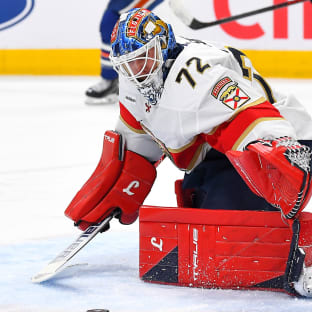
Vladar was a difference-maker for the Flyers, stopping 148 of 158 shots in the series for a 1.61 goals-against average, .937 save percentage and two shutouts. The Penguins were able to get to Vladar a little in winning Game 4 (4-2) and Game 5 (3-2), but he rebounded with a 42-save shutout in Game 6 to win a goaltending duel with Arturs Silovs, who made 31 saves. Vladar outplayed Stuart Skinner (0-3, 3.08 GAA, .873 save percentage) in the first three games before Pittsburgh switched to Silovs (2-1, 1.52 GAA, .939 save percentage) in Game 4.