Every building in the NHL that the Edmonton Oilers travel to, the same questions are lobbed at opposing coaches. “How do you stop Connor McDavid? Do you game plan differently when McDavid and Draisaitl are on the ice? What’s the key to slowing down the Oilers’ first line?”
It was no different leading up to Tuesday night, as the Ottawa Senators prepared to welcome the Oilers. With both teams holding records under .500 despite playoff berths a season ago, the pressure was mounting, a spotlight that burns bright in both Canadian markets.
Travis Green could at least line match against the potent punch, as the head coach has the luxury of doing at home while holding last change. He assembled a second line of Shane Pinto between Michael Amadio on the left and Claude Giroux on the right.
Despite battling back from a two-goal deficit to force overtime, the Senators ultimately fell 3-2 after conceding the game-winner on a 4-on-3 penalty kill. While it’s never the goal to lose, it was an important point to secure for the Sens, especially against a caliber of opponent that had made it to back-to-back Stanley Cup Finals.
At even strength, Ottawa largely held its own — Edmonton’s top line only connected for Isaac Howard’s first career goal off a broken sequence at the tail end of a Sens power play.
Chalk it up as a success then, for the checking line.
“They had a tough matchup tonight, it doesn’t get any harder than that,” said Green after the game.
“I thought they did a pretty good job — you’re never going to eliminate [the McDavid-Draisaitl line] from scoring chances. They’re just too good. Smart players, and again, also a team that had lost a few in a row, they’re going to drive their engine. I thought [the Amadio-Pinto-Giroux] line was strong tonight.”
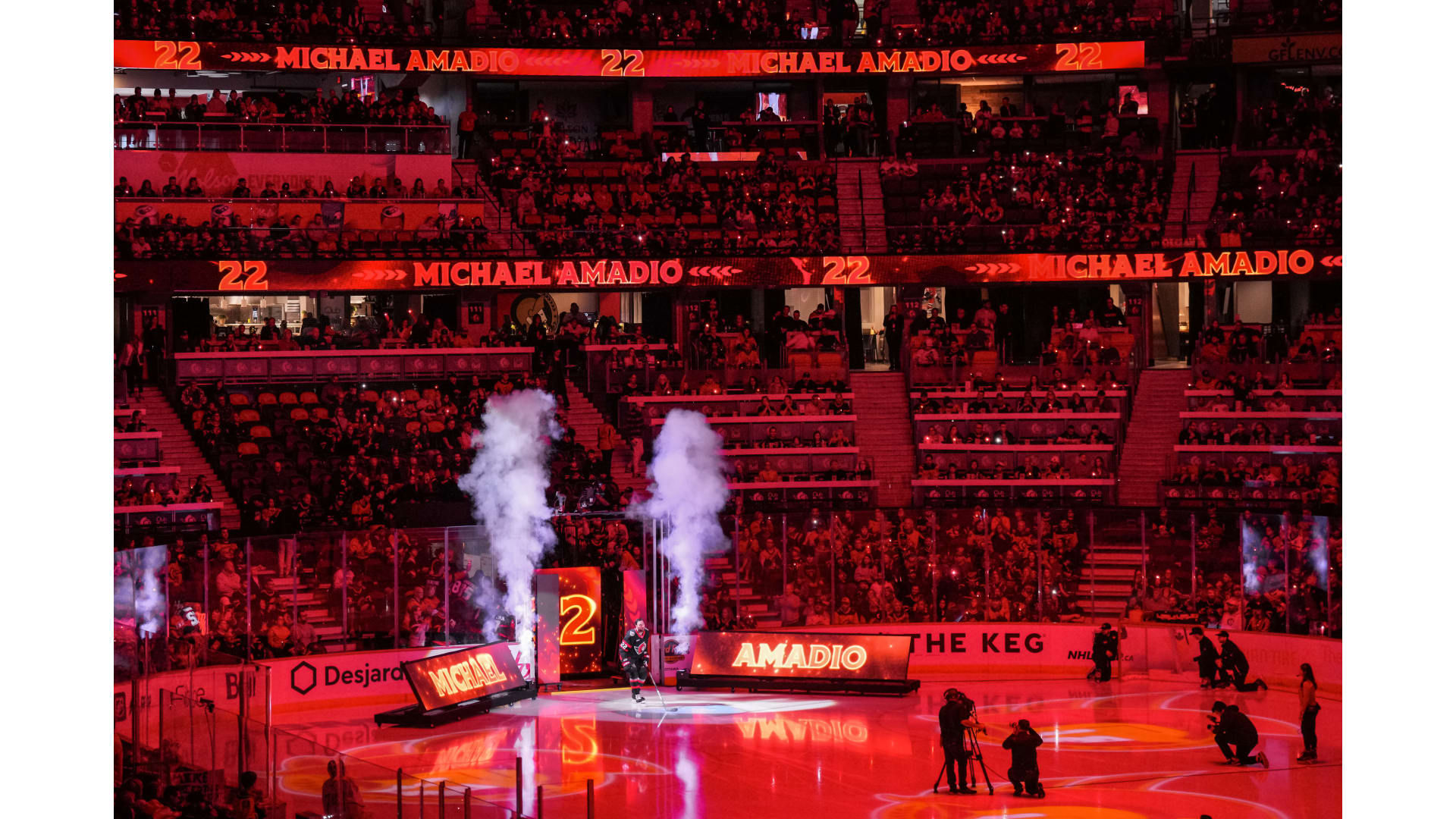
Amadio — the player on that line that might slide under your radar beside the 1100-point man Giroux and Pinto, the NHL’s leading goal scorer at the time — played only 11:53 minutes in the game.
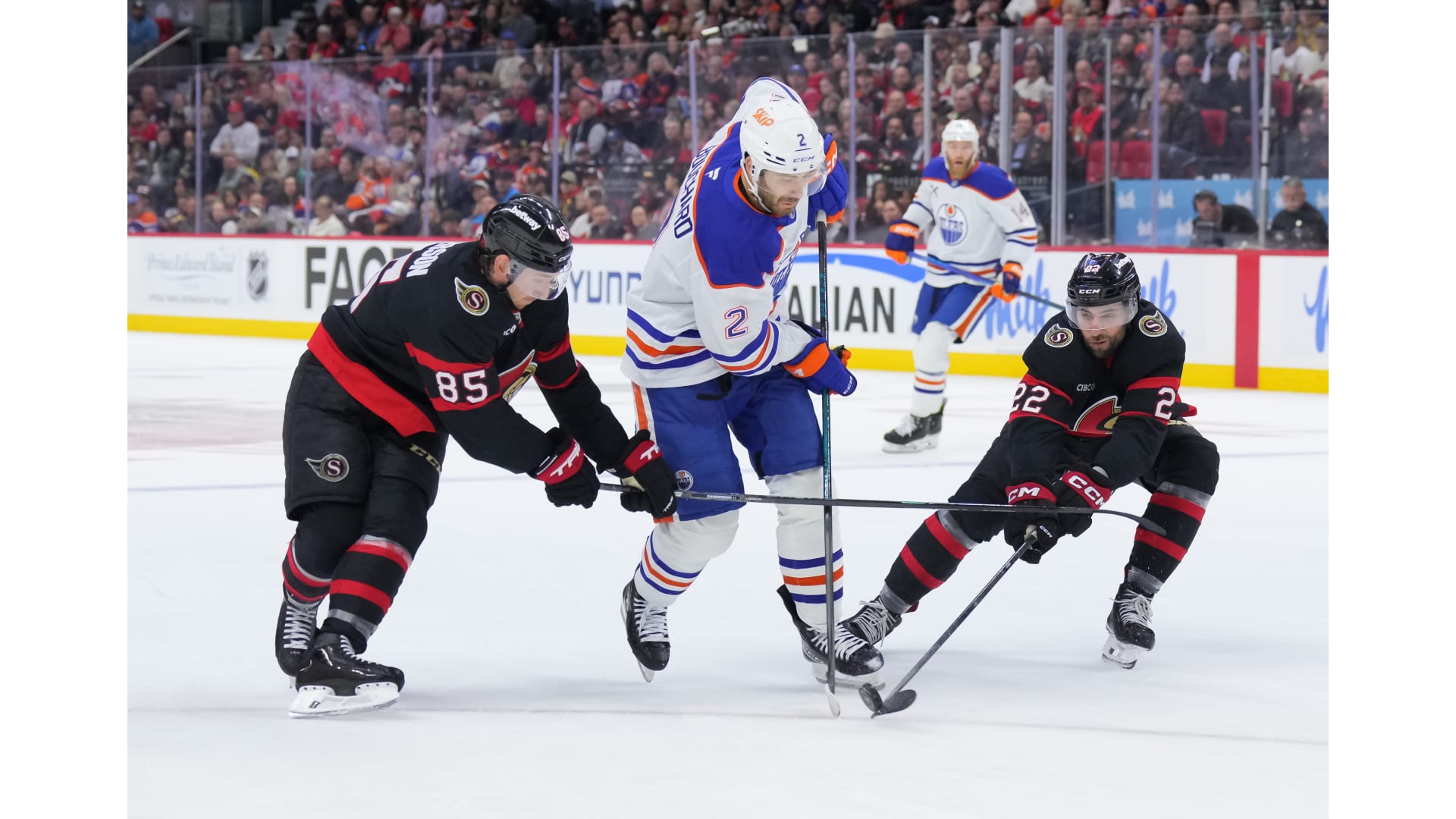
But he was all over McDavid, Draisaitl and Co., batting down pucks, blocking shots, and making the right plays along the boards as soon as the lines met on the opening faceoff.
On the ice, his play might not jump off the page at you, and neither will his stats at the end of the season. But focus in on the two-way forward when he plays, and you’ll see a different side of him.
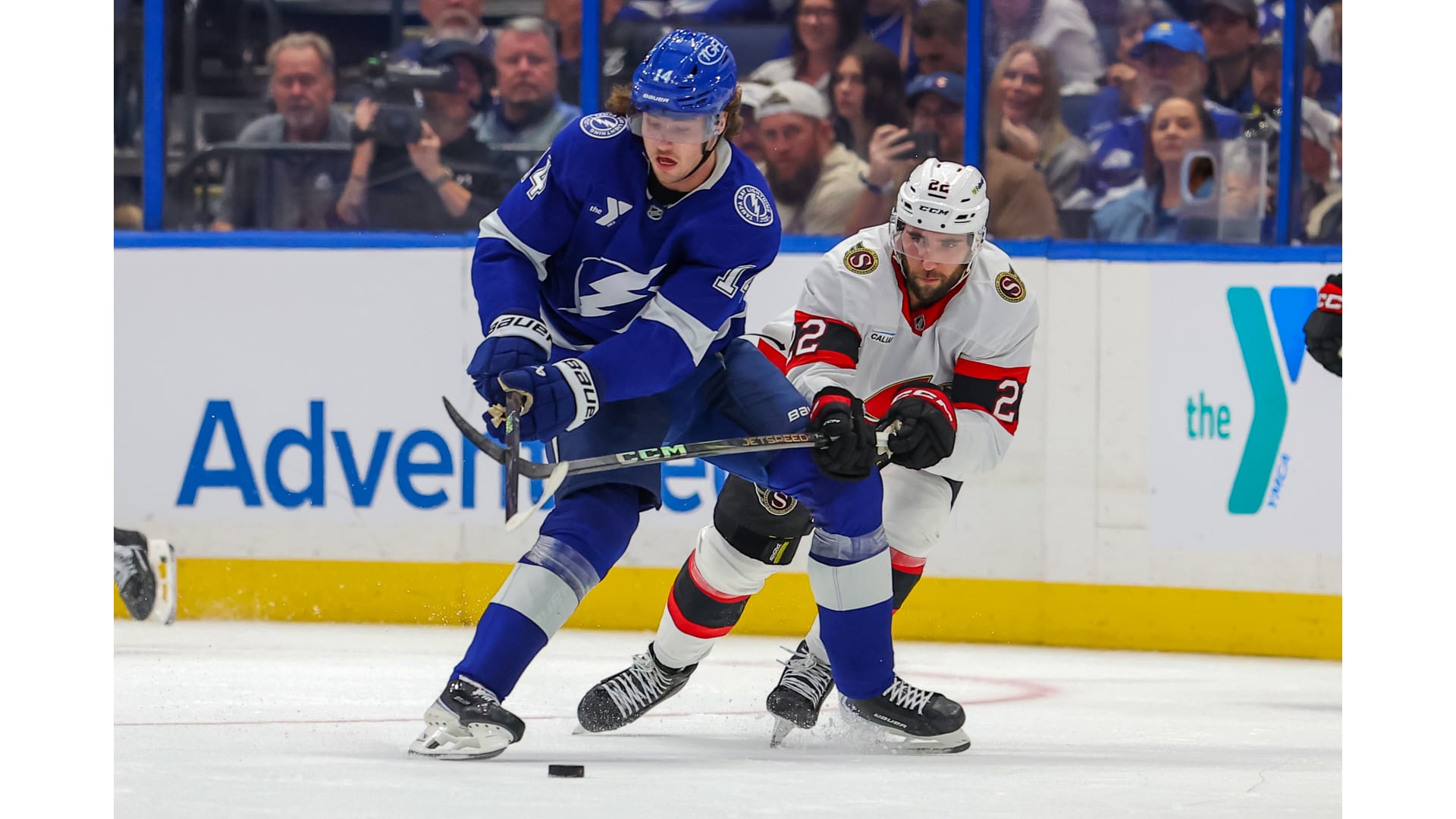
Be it pickpocketing a defender from behind, batting a waist-high pass down with his stick, or threading a saucer pass through multiple opponents, his versatility is the reason why he can play up and down the lineup. In the team’s season opener against Tampa Bay, he played 18:54 as part of the second line with Dylan Cozens and David Perron.
“I think it’s kind of underrated how defensively, positionally, how sound he is,” says Pinto.
“And his stick’s pretty elite, he’s so good at knocking down pucks, poke checking pucks, poaching pucks from the ‘D’, I think he’s just so elite at that. That just contributes to us trying to keep [other teams’ stars] on their heels, especially those top guys, they always want to cheat for offence.”
“He’s got a really good stick, a heavy stick,” agrees Giroux. “He wins a lot of battles, he’s not scared of going to the busy part of the rink.”
Last year, Green often tapped Amadio to play with Ridly Greig on the wing of Pinto, as a line that he often matched up against other teams’ best lines.
Per NaturalStatTrick, Amadio, Greig, and Pinto were the second most common forward trio in 2024–25 for the Senators, playing 24 games together (determined by being together for two or more even strength faceoffs in a game).
Despite starting just 50 shifts in the offensive zone in those games (versus 107 in the defensive zone), the line managed eight more high danger scoring chances than they allowed and scored 10 goals (versus nine allowed).
This season, Amadio has played with a plethora of linemates from the first line, all the way down to the fourth, when called upon by Green.
In just over 91 minutes of 5-on-5 play when Amadio has been on the ice through seven games, the Senators have outshot the opposition 52-24 and managed to create 18 high-danger chances against six allowed.
This has led to a 70.25 expected goals-for percentage, which ranks fifteenth in the league among players with two or more games played per Natural Stat Trick.