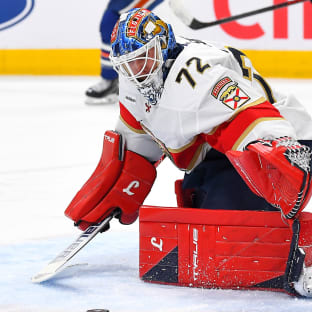

Nathan Walker STL

Nathan Walker doesn't step on the ice in Australia expecting red carpets and autograph lines. But as the first and only Australian native to play in the NHL, the St. Louis Blues forward carries something heavier than a hockey bag when he returns home: The mantle of possibility.

Since the 2023 NHL Global Series in Melbourne, when the League brought the Arizona Coyotes and the Los Angeles Kings to the Southern Hemisphere for the first time, Walker has seen real movement in Australian hockey. Yet the sport still edges forward inch by icy inch, held back by geography, cost and infrastructure.

"There's been steady growth, I think the interest is definitely there as well," Walker told NHL.com International. "A lot of kids are getting exposed to hockey now, whether it be through TV or through the Australian League that sometimes has games aired on TV. I think there's been a few new rinks pop up too, that have glass and new ice, so the exposure is definitely there."

Exposure is the easy part. The real test is turning curiosity into access and that, Walker argues, is where his country still stumbles.

Australia has about 20 indoor ice rinks, according to Ice Hockey Australia's IIHF profile. In years past, it reportedly had more than 40, Today, many have been shuttered because of high maintenance costs or land redevelopment pressures.

Major cities like Sydney, Melbourne, Brisbane, Perth and Canberra each have at least one or two viable ice sheets. In Melbourne, the O'Brien Icehouse in the District Docklands holds two Olympic-sized surfaces with boards suitable for hockey, but for many kids, the nearest rink is hours away.

It's not just distance. The cost burden looms large. Registration fees, ice rental, gear, travel -- and the time investment from parents pile up quickly in a country where hockey is still niche.

"I think there is a very sport-oriented culture in Australia, but at the same time, it's the climate that doesn't really help (hockey) in that regard," Walker said. "It's a lot easier to go to a sports store and grab a football or a soccer ball and a pair of boots and go kick the ball around for a couple of hours than it is to pay for all the equipment, find ice time, pay for that ice time… You could be playing 2 1/2 hours away. It's a lot of time you invest into it, and a lot of your parents' time as well. I think just the accessibility is a little bit easier in other sports in Australia, but like I said, it is slowly growing and hopefully those numbers can continue to grow."

In a typical North American or European youth hockey setup, a budding skater might have several indoor rinks within a short drive, subsidized team structures and more competition density. It was for these exact reasons Walker, now 31, had to make a hard choice at age 13: develop his talents outside of Australia or give up on the dream of making hockey a career path.

He went to Vítkovice, Czech Republic, and spent his teenage years living, studying and playing hockey 10,000 miles from home. He stayed his first year with a local family that didn't speak English, played for HC Vitkovice of Czech Extraliga to become the first Australian to play pro hockey in Europe, and earned an invitation to a development camp with the Washington Capitals in 2012. The Capitals eventually took him in the third round (No. 89) of the 2014 NHL Draft, his third year of eligibility.

Walker has 58 points (28 goals, 30 assists) in 234 regular-season NHL games for the Capitals, Edmonton Oilers and Blues, and five points (three goals, two assists) in 12 Stanley Cup Playoff games.

Talk about overcoming incredible odds. Every step of that sequence sounds improbable, doesn't it?

* * *

To Walker, being Australia's NHL pioneer isn't just a badge to wear. It's also a responsibility he sometimes feels -- and one he embraces.

"You do feel it at times, but at the same time I'm just another hockey player playing the game that he loves," he said.

When Walker returns home, he turns into a teacher, mentor and connector. He has run youth camps, joined local practices, answered questions and shared his path.

"The turnout has been great," he said. "You can't say enough about how much the people that do play hockey in Australia love the game. It is really great to see, and they all have the same dream that I had when I was a kid: They want to play in the NHL.

"To hear that definitely brings a smile to my face. And I think if I was in their position and had an Australian NHL player that would come to a camp, I would be jumping for joy, so I'm just trying to give back as much as I can."

Walker tries to help steer those kids and their parents through the realities of pursuing something outside Australia's mainstream sporting culture. He recalls kids asking whether they should use in-line skates back home when ice is scarce or how to balance training while living far from rinks.

"You can see their drive, their love for the game," he said, smiling. "They're doing it because they love to play hockey."

Walker also sees potential in school-based hockey initiatives.

"The big one would be implementing an ice hockey program into schools, and maybe having those schools play each other," he said.

That, he hopes, would introduce the sport earlier and allow kids to gradually grow into it.

"It is tough," Walker said. "It's a lot easier to go and get a rugby ball or a football and go kick that down the field than it is to get fitted out with all that hockey gear and find rinks to play at."

Kings, Coyotes face off in 2023 Global Series

Bringing NHL teams to Melbourne was not a stunt, Walker said. It was an investment in awareness. Now, two years later, he believes that spike in attention did feed the growth: more kids tuning in, streaming, watching highlight reels, following the AIHL (Australia's top-level league, celebrating its 25th season this year). Still, Walker warns awareness is just the start. Without infrastructure, regular ice access and lower cost barriers, many newly intrigued kids fall off early.

Despite the challenges, Walker's view of the hockey trajectory in Australia is cautiously optimistic. As much as he would love to see it in the top division of an IIHF World Championship, he knows it's a long shot that would likely take decades.

Australia's men's national team is ranked 35th in the world by the IIHF; the women's team is 29th.

"In 10 years' time, if you can be floating around Division 1A or 1B in the world championships and kind of cement yourself in one of those divisions, and then just keep working from there, I think that's a pretty realistic goal," Walker said. "And maybe 10, 20, 30 years down the road, we get a few more rinks, which will bring more players. And then, who knows where it can go from there?"

Walker also believes his post-playing career will stay intertwined with this mission.

"I'd like to stay involved in the game, help younger players get to that next level," he said.

He hopes potential NHL players from Australia follow their own paths, whether through Europe or North America, but with more support and fewer unknowns. Australian hockey is still in its thin-ice era, but even armed with only a few rinks, one trailblazing NHL player and a growing base of passionate kids, the game's future there is inching toward solid ground. And if Walker has any say -- and if a few more rinks turn on their compressors -- that ground may freeze solid sooner than anyone thought possible.

section-title-related-items