

Maven Vachon Fleury badge

Legendary hockey reporter and analyst Stan Fischler writes a weekly scrapbook for NHL.com. Fischler, known as The Hockey Maven, will share his knowledge, brand of humor and insights with readers each week.

This week, Stan takes a look at the similarities between two of the NHL's best French-Canadian goalies, Hockey Hall of Famer Rogie Vachon and Marc-Andre Fleury of the Vegas Golden Knights.

The NHL has been graced by talented French-Canadian goalies dating to its inception in 1917. The annual award given to the League's top goalie is named for Georges Vezina, one of the NHL's early stars with the Montreal Canadiens, and since then, French-Canadians such as Lorne Chabot, Jacques Plante, Bernie Parent, Patrick Roy and Martin Brodeur rank among the best in League history at the toughest job in sports.

Size isn't a deterrent to excellence. One of the smallest French-Canadian goalies in the NHL's expansion era was 5-foot-8 Rogie Vachon, who was inducted into the Hockey Hall of Fame on Nov. 14, 2016.

"In an age of bigger and bigger goalies, Vachon proved that a smaller goaltender with skill still could rank among the best," said the late Claude Larochelle, a dean of French-Canadian sports journalists. "Rogie proved it on every level from the NHL regular season, playoffs and the international scene as well. He was a throwback to good, little goalies like Roy Worters and Gump Worsley, all Hall of Famers."

Vachon and one of today's top goalies, Marc-Andre Fleury of the Vegas Golden Knights, have more in common that merely being from the province of Quebec. Each has three Stanley Cup rings as well as the kind of durability that's vital to a long, successful NHL career.

Vince Comunale, who covered the Pittsburgh Penguins during Fleury's 13 seasons before he was selected by Vegas in the 2017 NHL Expansion Draft, said the key to the goalie's success is his love of the game.

"Behind that big smile is an insatiable competitive drive," Comunale said. "Vegas is the perfect fit because he's a workhorse goalie. When he took the Knights to the Final it was vindication for him after his exit from Pittsburgh, but he'd never admit he was seeking it."

VGK@EDM: Fleury turns away Bear in overtime
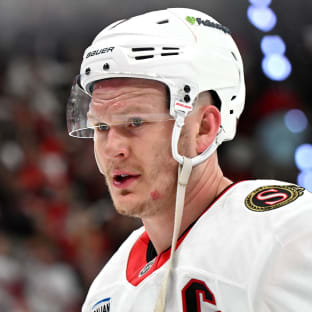
Another thing Vachon and Fleury have in common is the frustration of losing his job as starter while still in the prime of his career, then recovering to excel with his next team.

Vachon was a two-time Cup champion with the Montreal Canadiens until Video: VGK@EDM: Fleury turns away Bear in overtime came along late in the 1970-71 season; Dryden took the starting job and played every minute during their run to the Cup. On Nov. 4, 1971, Vachon was traded to the Los Angeles Kings, where he helped establish hockey on the West Coast.
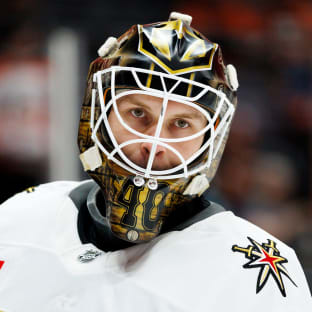
Fleury was brilliant during Pittsburgh's Cup run in 2009, but wound up playing a supporting role behind Matt Murray in 2016 and 2017 before being taken by Vegas and helping the first-year Golden Knights reach the Stanley Cup Final in 2018.

Winning the Cup for the first time by defeating the Detroit Red Wings in Game 7 of the Final on June 12, 2009, is the memory Fleury says he'll never forget.

One year after struggling during Pittsburgh's six-game loss to the Red Wings in the 2008 Cup Final, Fleury proved that he could win when everything was on the line.

"Everything before that didn't matter," Fleury told Shelley Anderson in The Hockey News book, "The Greatest Game I Ever Played."

"Now, for me, it was just that one game. We only had to win one there. That's what mattered."

What mattered is that Fleury stepped up when the game came down to one final moment. The Penguins led 2-1 with 6.5 seconds left and the face-off in Pittsburgh's zone. A point shot by Detroit defenseman Video: VGK@EDM: Fleury turns away Bear in overtime was blocked, but the carom came right to his defense partner, Video: VGK@EDM: Fleury turns away Bear in overtime, who appeared to have room to score and send the game to overtime.

Except that he didn't. Fleury executed a full-body lunge and got in front of Lidstrom's shot an instant before the final horn sounded, giving Pittsburgh its first championship since 1992.

"I got the puck in the ribs," he said. "I had a bruise after the game. I still had the mark on my ribs for a couple of weeks. It was a good souvenir."

Fleury earned championship rings when the Penguins won again in 2016 and 2017. But Murray was in goal during the Cup Final each time, and to no one's surprise, Fleury wound up in Vegas days after the Penguins polished off the Nashville Predators.

Just as Fleury helped establish the Golden Knights, Vachon brought instant credibility to the Kings after he arrived. He played seven seasons in Los Angeles, was an NHL Second-Team All-Star in 1974-75 and 1976-77 and finished among the top three in voting for the Hart Trophy as the NHL's most valuable player in 1975 and 1977. The Kings retired his No. 30 on Feb. 14, 1985.

"A lot of writers thought my size was against me," said Vachon, who won 353 games and had 51 shutouts during 16 seasons in the NHL. "And I did get a hard time from some hockey people."

Vachon's most pungent critic was Punch Imlach, the coach-general manager of the Toronto Maple Leafs. Imlach ridiculed Rogie the rookie during the 1967 Cup Final between the Canadian rivals. "We're not going to lose to a Junior B goalie," snapped Imlach.

The Maple Leafs did beat the Canadiens in six games for the Cup. But Vachon rebounded to help Montreal win it all in 1968 and 1969, then played some of his best hockey after going to Los Angeles.

Likewise, Fleury quickly turned into a rock star in Vegas. He was perhaps the biggest reason that the Golden Knights shattered NHL records for expansion team success, capped by a trip to the Cup Final. At age 33, he regained the form that carried the Penguins to the Cup in 2009, finishing the regular season with a .927 save percentage, then matching that number in the playoffs.

He also became the face of the NHL's 31st franchise, winning over fans and media alike with a blend of humility and humor. "It's about the game," he said. "I love to play and still have a good time doing it."

So did Vachon -- and that's yet another reason why their respective careers look so much alike.