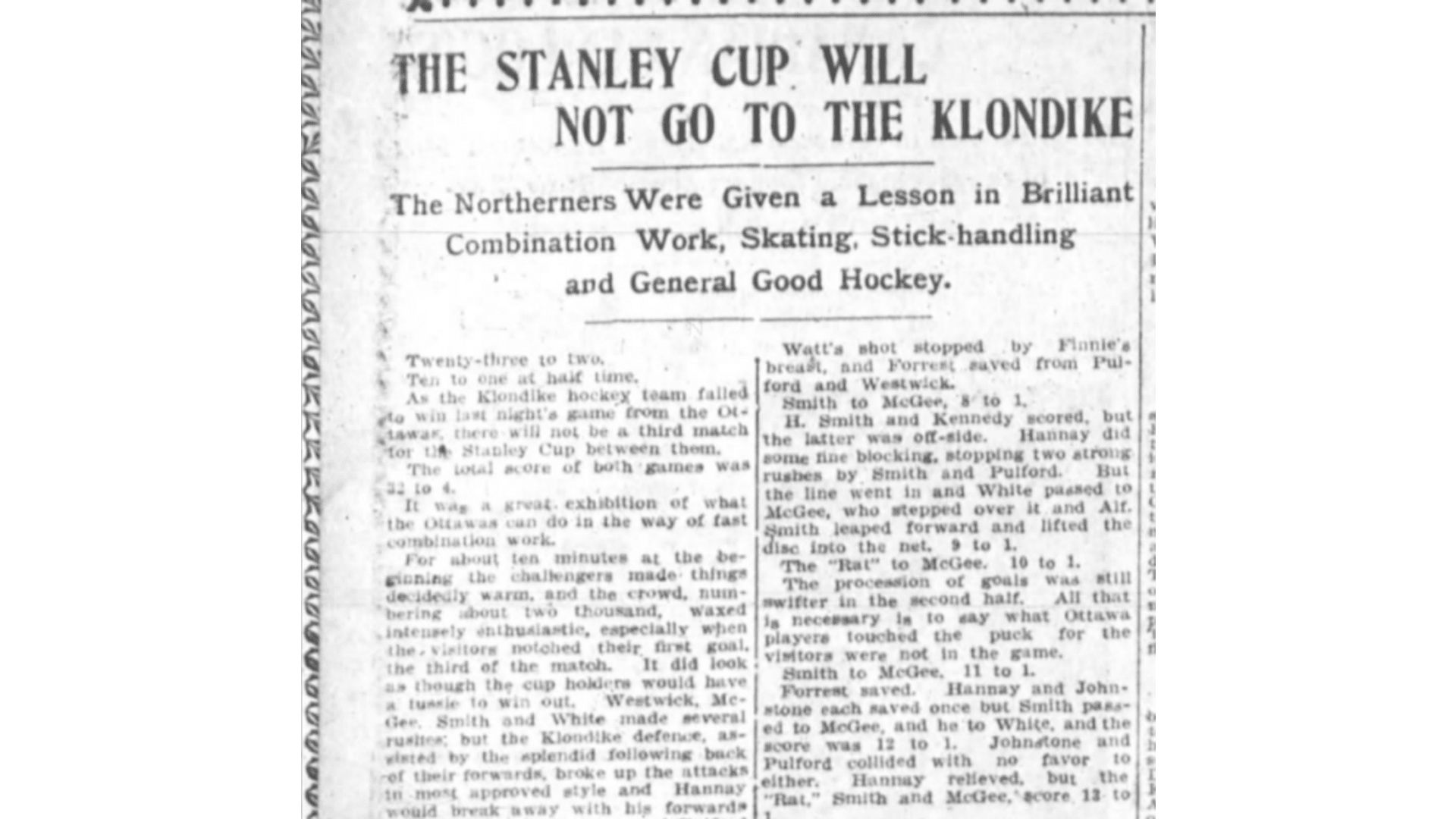
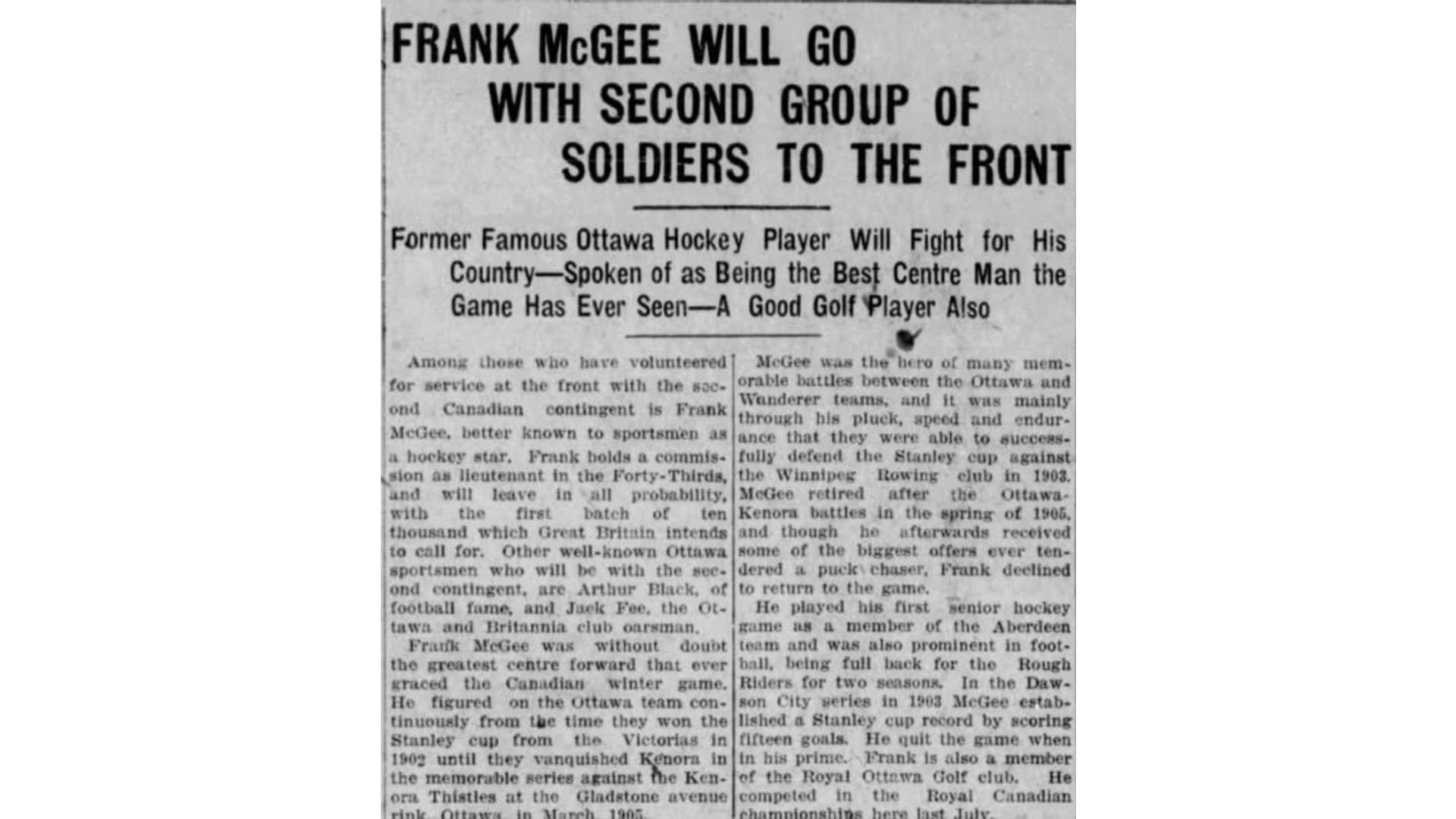
Throughout his professional hockey career and military service, Francis Clarence McGee demonstrated one thing: retreat was never an option for him. Even in situations where he had to put himself in great danger.
First, when discussing his record — which will likely never be broken — in a Stanley Cup game, it is impossible to ignore his nickname. On the ice, he was known as “One-Eyed” Frank McGee.
The young Ottawa native lost the use of his left eye at the age of 17 when he was hit in the face by a raised puck. That didn't stop him from returning to the game a few years later to become one of the pillars of the Ottawa Silver Seven, who won the Cup several times in the early 20th century.
Things hadn’t changed much for McGee when, in his early thirties, he suffered a knee injury when the armored vehicle he was riding in was hit by shellfire somewhere in Belgium, while he was fighting in World War I. After a long period of hospitalization in England, he chose to rejoin his battalion, now in France, to take part in the Battle of the Somme.
This Franco-British offensive, launched on July 1, 1916, aimed to break through German lines and liberate French territories. One of the deadliest battles in history, it involved soldiers from some 20 nations and resulted in 1.2 million dead, wounded, and missing.
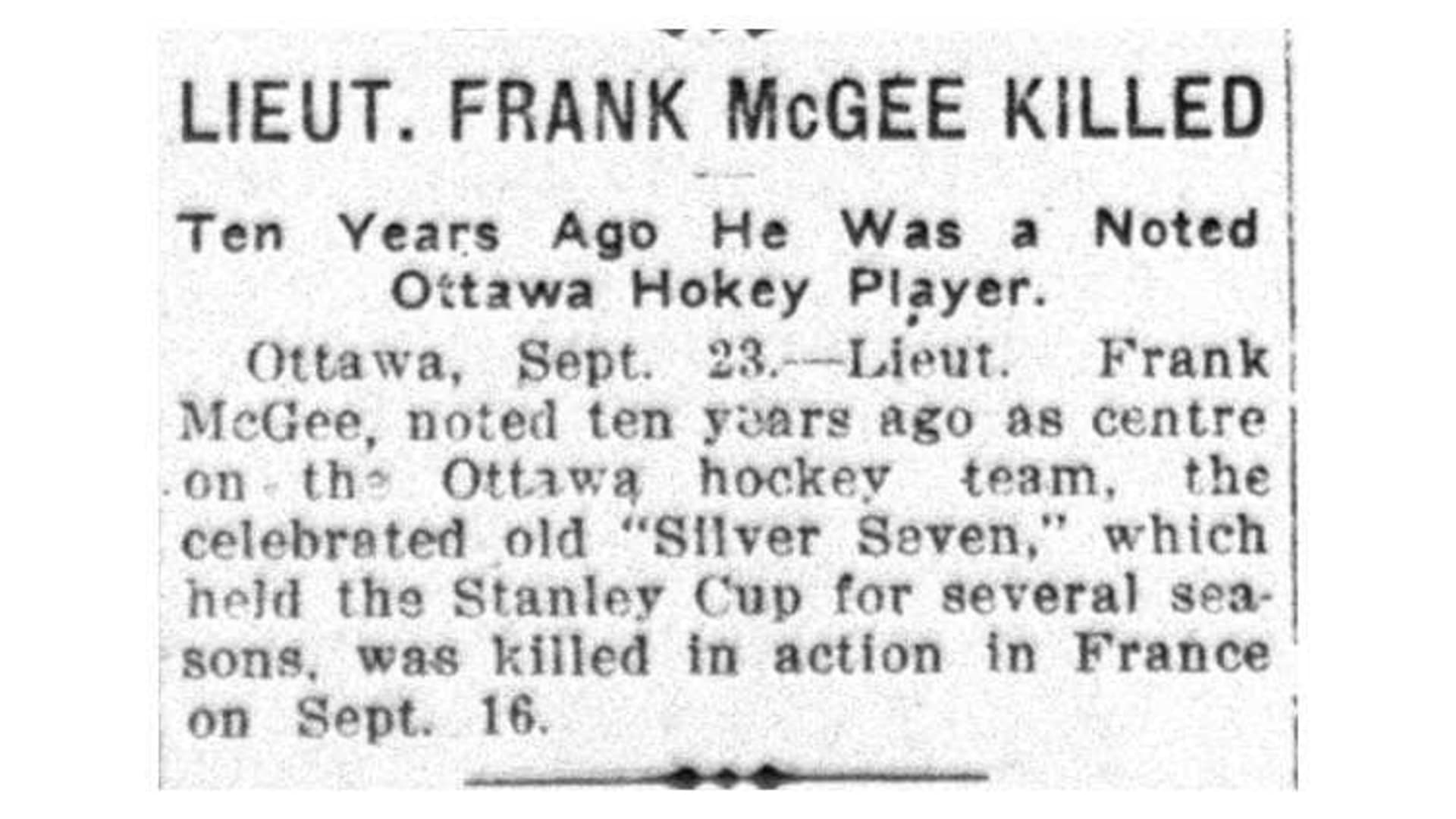
McGee was among them. He was declared dead in action on September 16, 1916. He was 33 years old. His body was never found.
A century later, McGee's name appears on the Canadian National Vimy Memorial, which was erected to honor Canadian soldiers who died in France without a known grave.
As Remembrance Day approaches, the Vimy Foundation and the Hockey Hall of Fame have helped us share his story.