sea_32in32_2026

NHL.com is providing in-depth roster, prospect and fantasy analysis for each of its 32 teams from Aug. 1-Sept. 1. Today, the Seattle Kraken.

The Seattle Kraken don’t go into this season needing to prove they can contend for a spot in the Stanley Cup Playoffs. They already did that for a significant portion of last season.

Seattle was in a playoff position entering the break for the 2026 Winter Olympics but went 2-6-0 when the NHL season resumed before an 11-game slide (1-8-2) from March 17-April 7 sealed the Kraken's fate and kept them out of the playoffs for a third straight season. Their 34-37-11 record landed them in sixth place in the Pacific Division.

The question now isn’t how to become a playoff-caliber team, but  how to remain one for all 84 games.

“Proud of where we were going into the (Olympic) break but didn't get the job done,” general manager Jason Botterill said. “So what do we have to tweak? What do we have to make adjustments on?”

Inside look at the Seattle Kraken ahead of the 2026-27 season

The answers this summer did not include a roster overhaul. Instead, Botterill is betting another year of development for a talented young forward group, combined with greater comfort in coach Lane Lambert’s system, the return of late-season addition Bobby McMann and the June 21 addition through trade of another speedy forward in Mackie Samoskevich can turn the near miss of last season into a playoff return.

“There's a possibility we could have seven or eight forwards 23-and-under on opening night," Botterill said. "It gets us pretty excited about where we are and what we could accomplish this year. And then the fact there's a better cohesiveness between our coaching staff and our players, just from the standpoint of they know what to expect from Lane, what the system is. It's not like we're starting from ground zero like we did last season.”

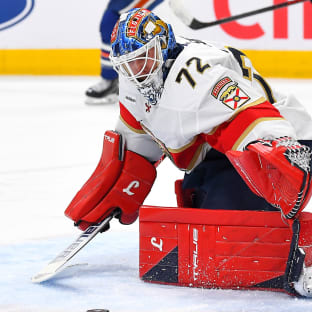
Samoskevich, acquired in a trade with the Florida Panthers for a first-round pick in the 2026 NHL Draft and a second-round pick in the 2027 NHL Draft, is part of that promising group of young forwards. The 23-year-old scored 27 goals over the past two seasons in a deeper Panthers lineup and should get more opportunity to contribute with the Kraken.

OTT@FLA: Samoskevich finishes Jones' pass for PPG in opening period

Seattle sees speed and style similarities to McMann, who scored 10 goals in 18 games for the Kraken after being acquired from the Toronto Maple Leafs in a March 6 trade.

“That's my biggest strength, speed with the puck,” said Samoskevich, who signed a three-year, $11.55 million contract ($3.85 million average annual value) on July 1 after 32 points (12 goals, 20 assists) in 77 games with the Panthers last season. “The team's already got a ton of speed and a ton of talent, so adding to it will be a really good thing.”

The addition of Samoskevich, return of McMann, internal growth for young forwards like 20-year-old Berkly Catton, who played 66 games last season, and better health for veterans like forward Jared McCann, who scored 20 goals despite being limited to 52 games last season, should all help Seattle improve on a 28th place finish in scoring (2.73 goals per game).

So too should the continuity of a second season under coach Lambert, especially with an abbreviated preseason.

“When you have a new coach, you have a new style, a lot of new things and you're not sure how it's going to go,” forward Kaapo Kakko said. “The team is almost the same and that's going to help a lot, especially (with a) shorter camp.”

VGK@SEA: McMann picks the top left corner for equalizer in the 3rd

In theory, it should be easier for the Kraken to get back to the aggressive identity that led to success last season, similar to the style that drove them to the playoffs in 2022-23, where they defeated the Colorado Avalanche in the Western Conference First Round. The key will be doing it consistently -- relentlessly -- throughout a lineup that may lack in game-breaking talent at the top end but hopes to make up for that with depth.

Familiarity should help.

“They're not thinking nearly as much,” Botterill said. "It's just natural for them to attack a little bit more out there.”

As much as scoring was an issue down the stretch last season -- the Kraken only managed 11 goals in the first six losses coming out of the Olympic break and averaged 2.1 goals per game during the 1-8-2 stretch that effectively ended their postseason hopes -- Botterill believes the problems down the stretch started with spending too much time in the defensive zone.

“We have to be more assertive in our D zone,” Botterill said. “Ending plays quicker in the D zone, finding ways to move the puck out to get out so we can play in the offensive zone more and create more chances.”

Getting more of those chances to the net with traffic for a team that struggled to create in-tight opportunities will be another important factor, but most important will be doing it all start to finish.

“We've got to be better, that's the truth,” Kakko said. “We started well last year, and that's kind of what we have to do this year also, and then we've just got to keep pushing.”

NHL.com senior director of editorial Shawn P. Roarke contributed to this report

Related Content